


Every card on the market calls itself the best rewards credit card, and that is exactly the problem. One dangles a 100,000-point bonus, another a flat 2% cash back card with no annual fee, a third a $325 fee it swears you will earn back in statement credits. So you are left guessing whether a travel card actually beats a no-fee cash-back card for the way you personally spend, and one wrong guess locks you into a fee you never recoup. The trap gets more expensive in 2026, because the average annual percentage rate (APR) on cards charged interest sits near 22% in the latest Federal Reserve data, so a single carried balance quietly erases a full year of rewards.
Before I rank a single card, I lay out the exact method I use to rate all six, then walk you through each one and end with a clear verdict for your spending profile.
1. Our methodology: how we compared the six 2026 rewards cards
Here is the method I run all six cards of this article through, giving us a single yardstick that turns a 100,000-point headline and a $325 fee into one comparable number.
1.1 The six levers that decide net value (and the summary table)
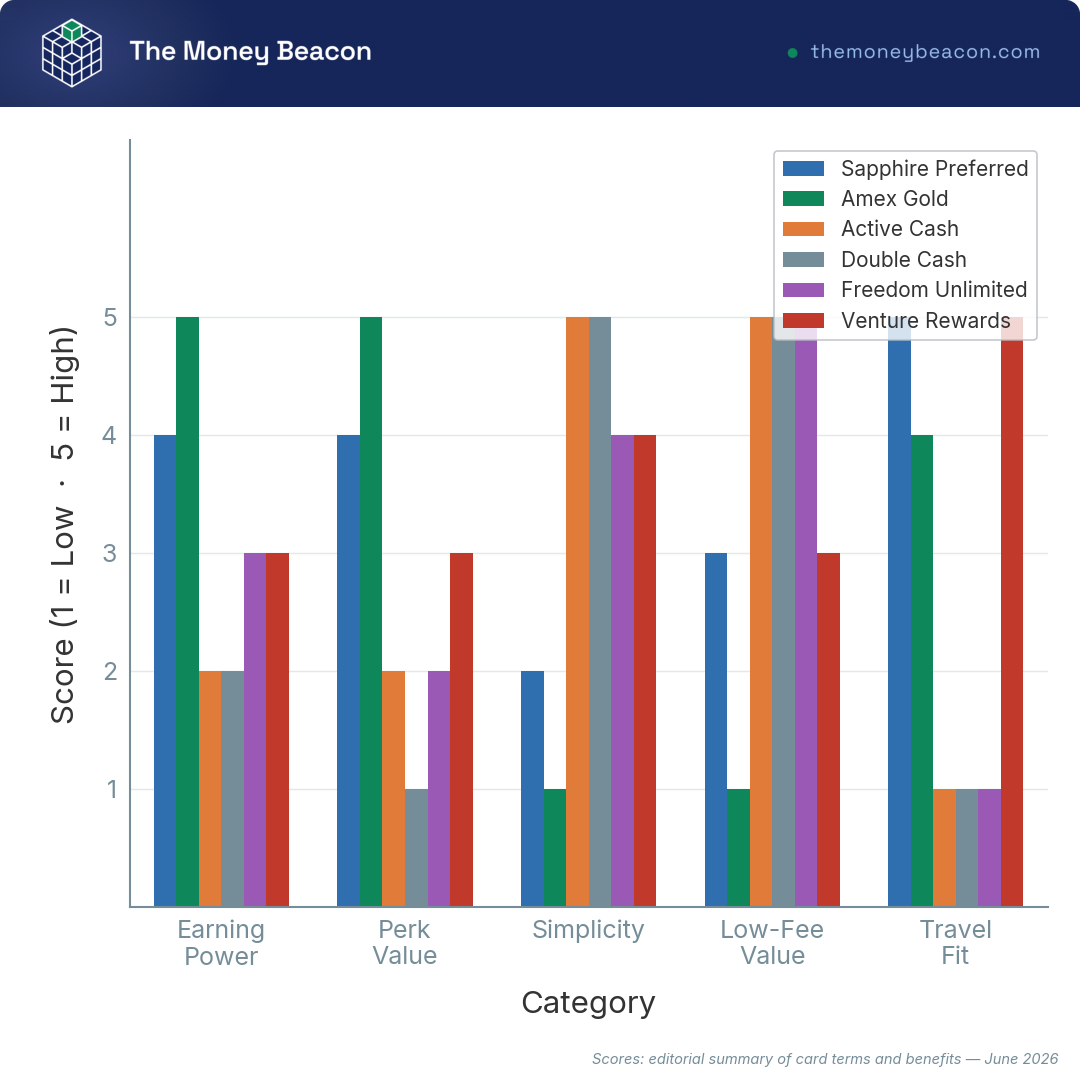
Six levers decide what a rewards card is actually worth to you. The first is the earn rate by spending category, the second is the annual fee, the third is the sign-up bonus and the spend threshold attached to it, the fourth is what a point or mile redeems for, the fifth is the APR and penalty terms (a tail cost you pay only if you slip), and the sixth is perks net of the effort it takes to use them. Run those together and it becomes pretty clear that there is no universal best card. The winner is simply the one that nets the most value for your specific spending mix, and it is net value after fees, not the headline bonus, that decides it.
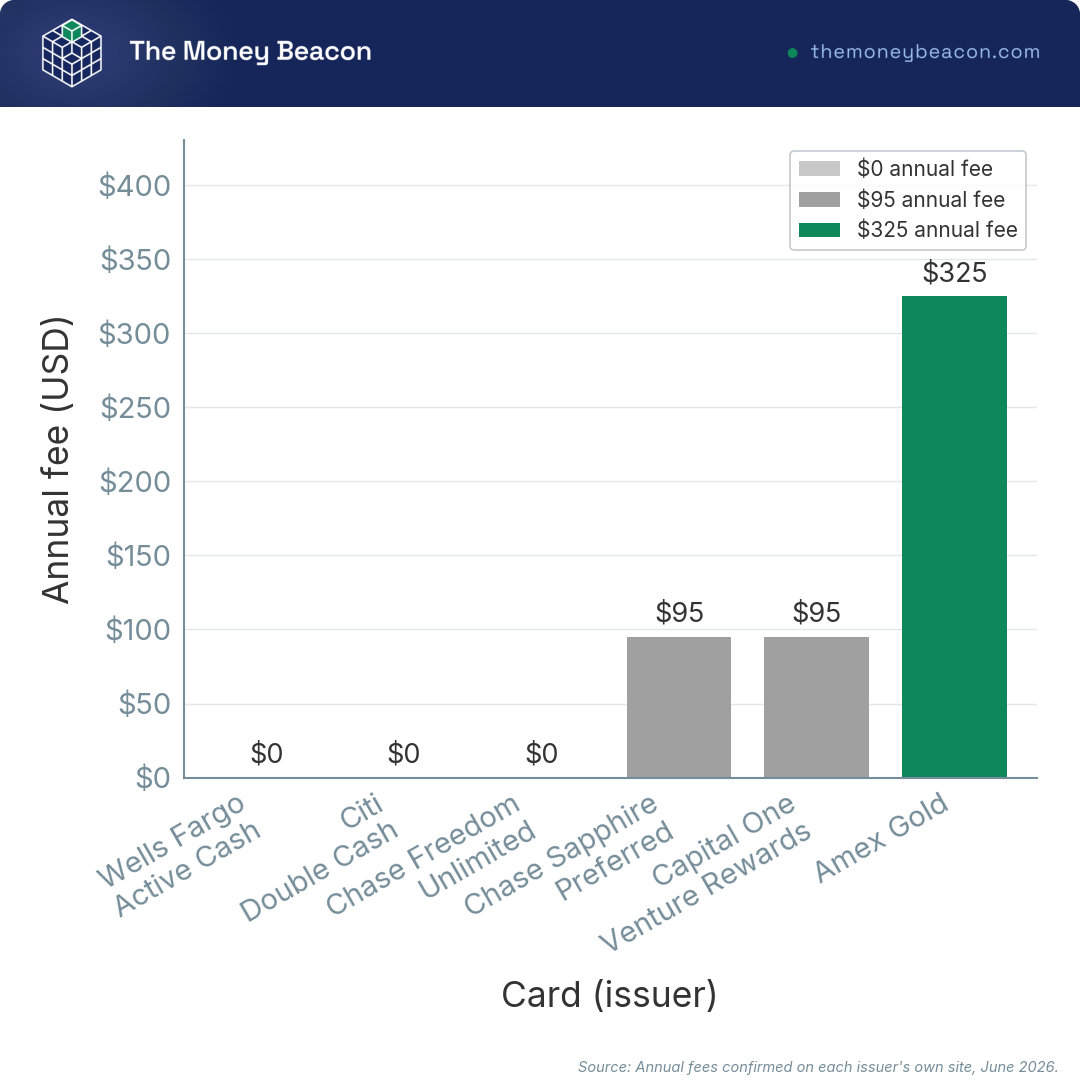
The six cards here split into three fee tiers, which makes the trade-offs easy to see. Three charge $0 (Wells Fargo Active Cash, Citi Double Cash, Chase Freedom Unlimited), two charge $95 (Chase Sapphire Preferred, Capital One Venture Rewards), and one charges $325 (the American Express Gold Card).
| Card (issuer) | Annual fee | Best-fit profile | Headline earn | FX fee | Net-value driver |
|---|---|---|---|---|---|
| Chase Sapphire Preferred | $95 | Frequent traveler (transfers) | 5x Chase Travel / 3x dining | $0 | Transfer partners + protections + $100 hotel credit |
| Amex Gold | $325 | Dining & grocery heavy | 4x dining / 4x US supermarkets | $0 | Monthly credits (must use) |
| Wells Fargo Active Cash | $0 | No-fuss flat-rate | 2% flat | 3% | Simplicity + 12-mo intro APR |
| Citi Double Cash | $0 | No-fuss / balance transfer | 1%+1% = 2% | 3% | $0 fee + 18-mo BT runway |
| Chase Freedom Unlimited | $0 | Everyday earner / pair | 1.5x base / 3x dining | 3% | Pairs with Sapphire for transfers |
| Capital One Venture Rewards | $95 | Flat-miles traveler | 2x everything | $0 | Simple miles + $0 FX |
Data current as of June 2026.
Those fee gaps are the right place to start, before any rewards math.
1.2 How we compute effective earn rate and net annual value
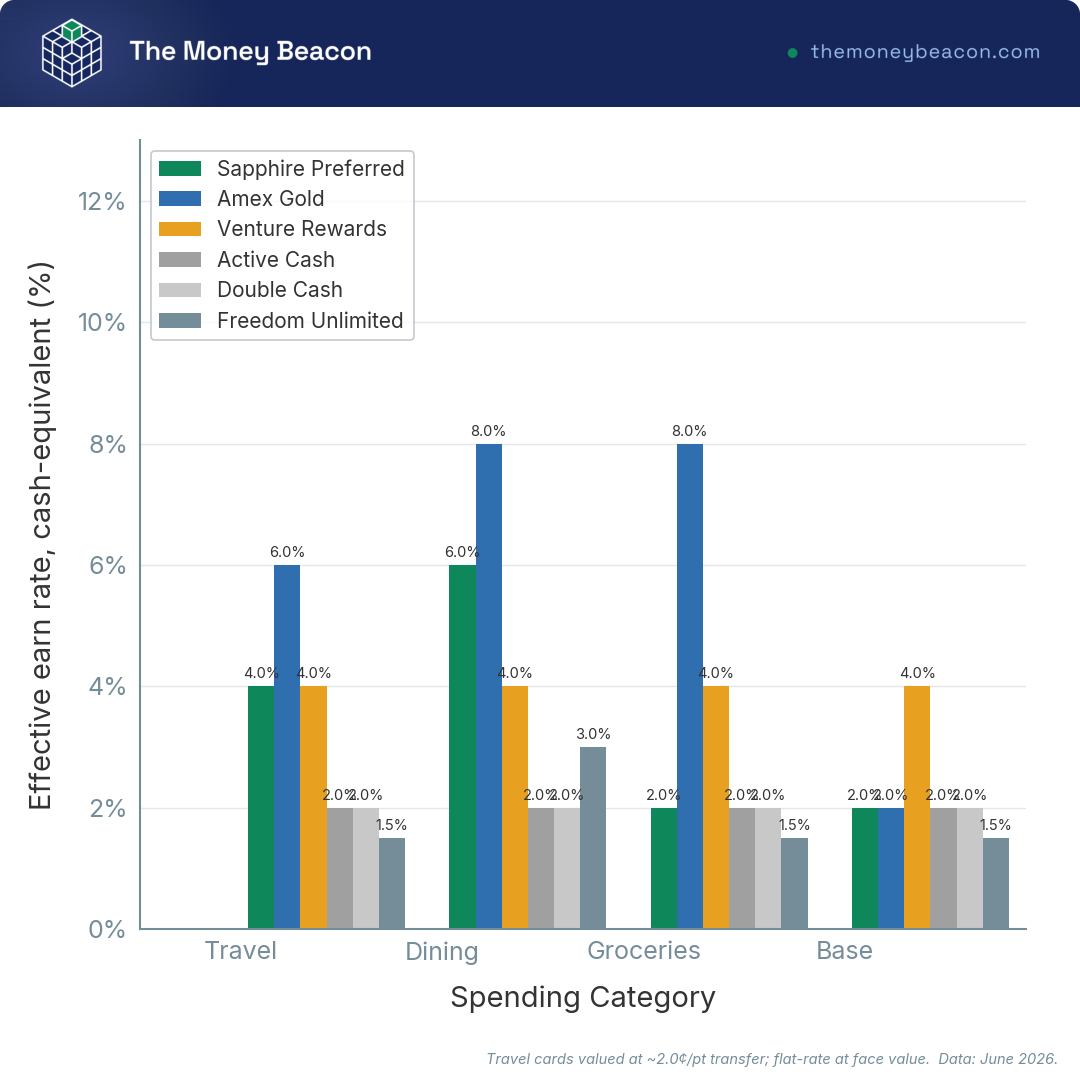
A “3x” multiplier sounds great, but there’s one question you’ve got to ask yourself: three times what, and worth how much when you redeem it? That is what the effective earn rate answers. It is the points or miles per dollar multiplied by the value of each point in cents. The Sapphire Preferred earns 3x on dining, and at a realistic 2.0 cents per point through a strong transfer partner, that is an effective 6.0% back on dining. Redeem the same points for cash at 1.0 cent each, and 3x is worth 3.0%.
So I treat the 1.0-cent cash value as the conservative baseline and anything up to about 2.0 cents as upside, never a guarantee. Net annual value follows the same plain arithmetic: modeled rewards, plus the perks you will actually use, minus the annual fee. A $325 card has to clear $325 of extra value over a free card before it earns you a dollar. Before you apply anywhere, map your own yearly spending by category and confirm every fee and bonus on the issuer’s own site, because that one habit beats every marketing claim you will read. The same logic powers our wider high-yield savings account comparisons, where the question is always what something nets you per year.
1.3 The modeled spending profiles and the regulatory backbone
Net value means nothing in the abstract, so I run every card against three real households rather than a single “average” spender. The frequent traveler puts about $30,000 a year on the card, weighted toward travel and dining. The dining-and-grocery-heavy household spends roughly $25,000, concentrated in restaurants and supermarkets. The no-fuss flat-rate user runs about $20,000 spread across everyday categories. These are illustrative subsets of discretionary card spending, not a full budget, but they make the comparison more realistic.
| Profile | Travel/yr | Dining/yr | Groceries/yr | Gas/transit | Everything else | Total/yr |
|---|---|---|---|---|---|---|
| Frequent traveler | $9,000 | $4,500 | $3,600 | $2,400 | $10,500 | $30,000 |
| Dining & grocery heavy | $2,500 | $6,000 | $7,200 | $1,800 | $7,500 | $25,000 |
| No-fuss flat-rate | $1,500 | $2,400 | $4,800 | $2,400 | $8,900 | $20,000 |
Data current as of June 2026.
Behind every offer sits a set of consumer-protection rules worth knowing. The Credit CARD Act of 2009 still requires 45 days of advance notice before an issuer makes a significant change to a consumer card, including an APR increase. The Truth in Lending Act and Regulation Z still require the standardized rate-and-fee table, the Schumer box, on every offer. And the Consumer Financial Protection Bureau’s 2024 rule that tried to cap certain late fees at $8 was stayed and vacated, so it is not in force, and standard CARD Act safe-harbor late fees apply instead.
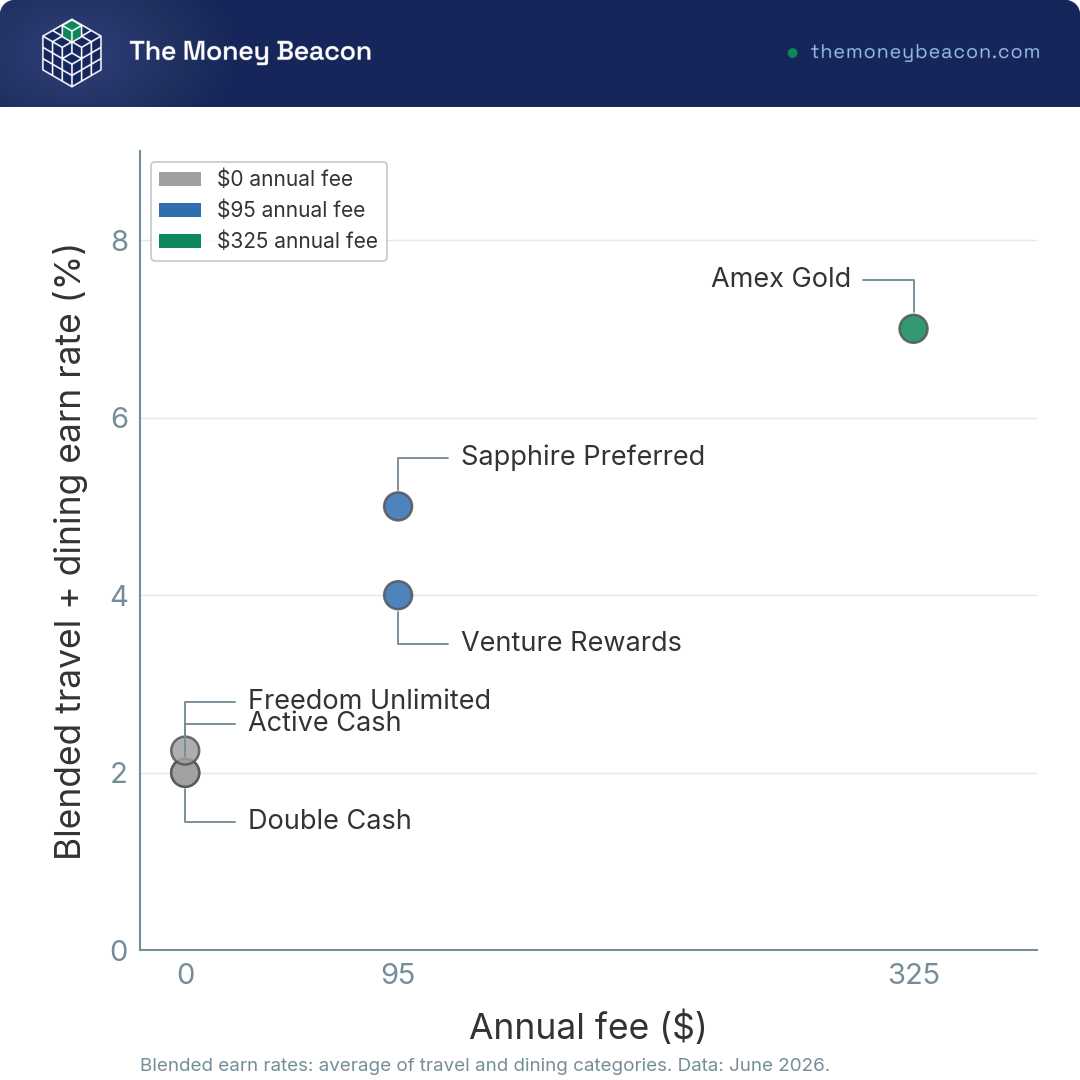
The first card that we will have a look at is the one most travelers go for: the Chase Sapphire Preferred.
2. Chase Sapphire Preferred: best for the frequent traveler who wants transfer-partner upside
2.1 Overview
The Chase Sapphire Preferred is a mid-tier travel card from Chase (JPMorgan Chase), built around Chase Ultimate Rewards points and a strong transfer-partner network, on the Visa network. It is aimed squarely at the traveler who wants real transfer upside and travel protections without paying a premium annual fee. It charges $95 a year, waives foreign transaction fees, and generally calls for Very Good to Excellent credit. That positioning, a modest fee with serious points potential, is what makes it the go-to travel card for a lot of people, and what the rest of this review tests.
2.2 Strengths
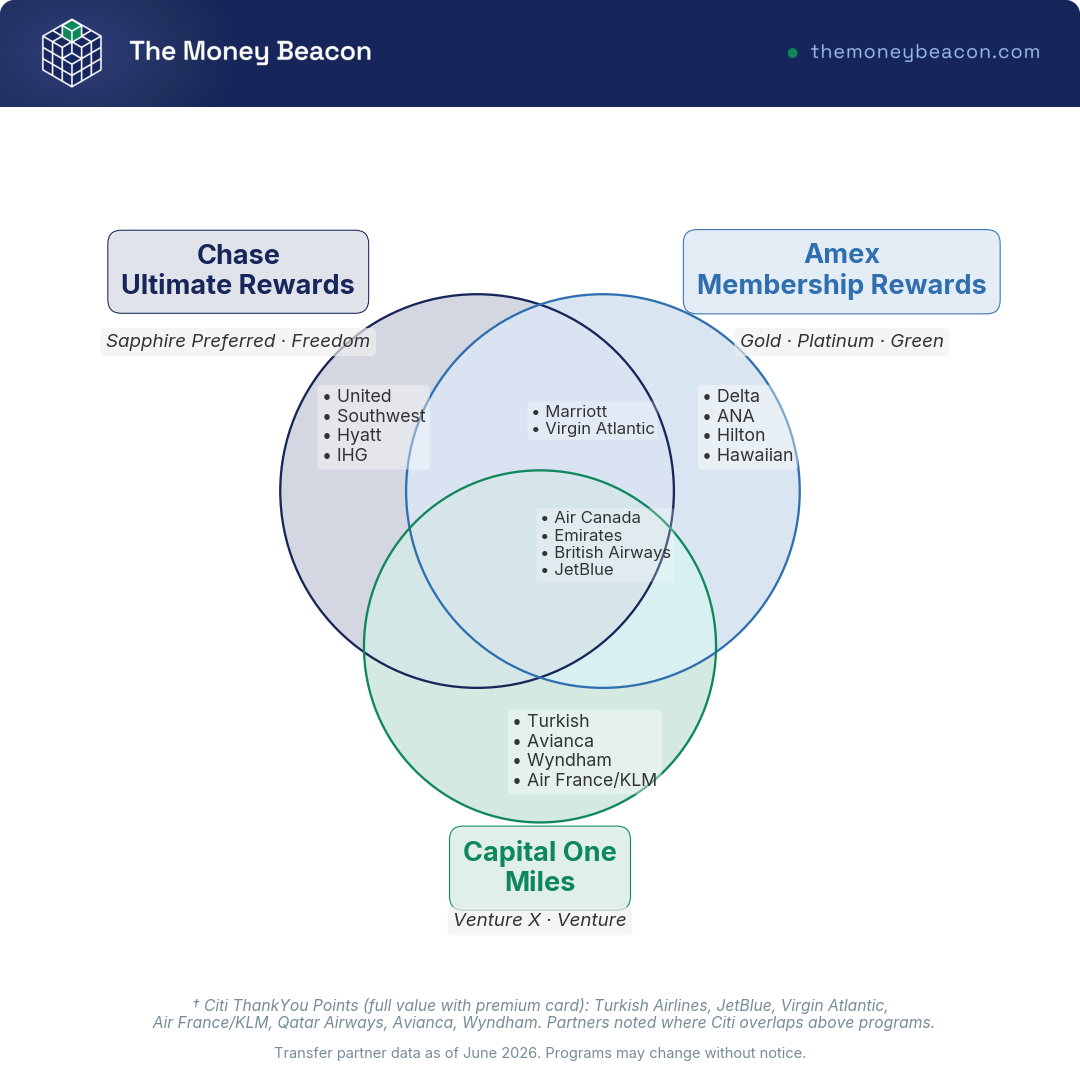
The earning is where this card makes its case. You get 5x on travel booked through Chase Travel, 3x on dining worldwide plus online groceries, select streaming, gas, and EV charging, and 2x on other travel. The points carry real weight because Chase’s transfer partners (United, Southwest, British Airways, Marriott, and Hyatt among them) can reach about 2.0 cents per point on strong redemptions, roughly double their cash value.
The card’s protections make it more complete. A $100 annual Chase Travel hotel credit offsets a chunk of the fee on its own, and you also get primary auto rental coverage, trip cancellation and interruption insurance, and $0 in foreign transaction fees, which matters the moment you spend abroad. For the right traveler, that is where the $95 annual fee earns its keep in points and perks rather than just disappearing.
2.3 Weaknesses
The headline value has some fine print. The 10% anniversary points bonus this card was once known for is being discontinued, no longer offered to new approvals and is being phased out for existing members, so don’t count on it. The 1.25-cent Chase Travel portal redemption is mostly for legacy points earned before October 26, 2025, while newer points generally redeem at 1.0 cent through the portal.
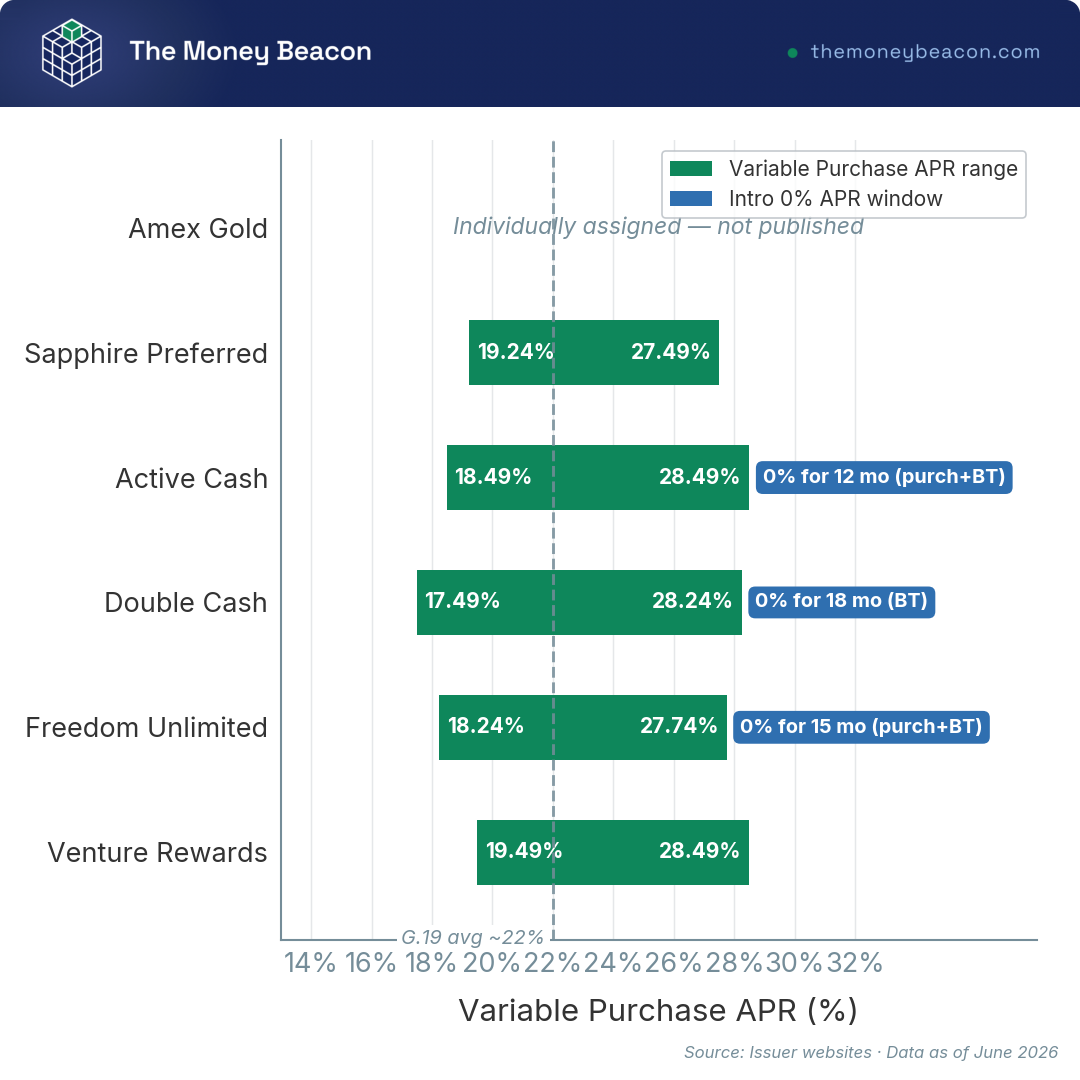
The rest is about effort and timing. Redeem for cash and your points are worth only 1.0 cent, so the card’s value depends on actually using transfer partners rather than taking the easy cash-out. There is no intro-APR offer, so the 19.24% to 27.49% purchase APR applies from day one if you carry a balance. And the 3x categories reward you only if you track which spend qualifies, which is real work for a set-and-forget user.
2.4 Pricing & fees
Here is the full cost-and-bonus picture, from the card’s current terms.
| Term | Detail |
|---|---|
| Annual fee | $95 |
| Variable purchase APR | 19.24% to 27.49%, tied to Prime |
| Intro APR | None |
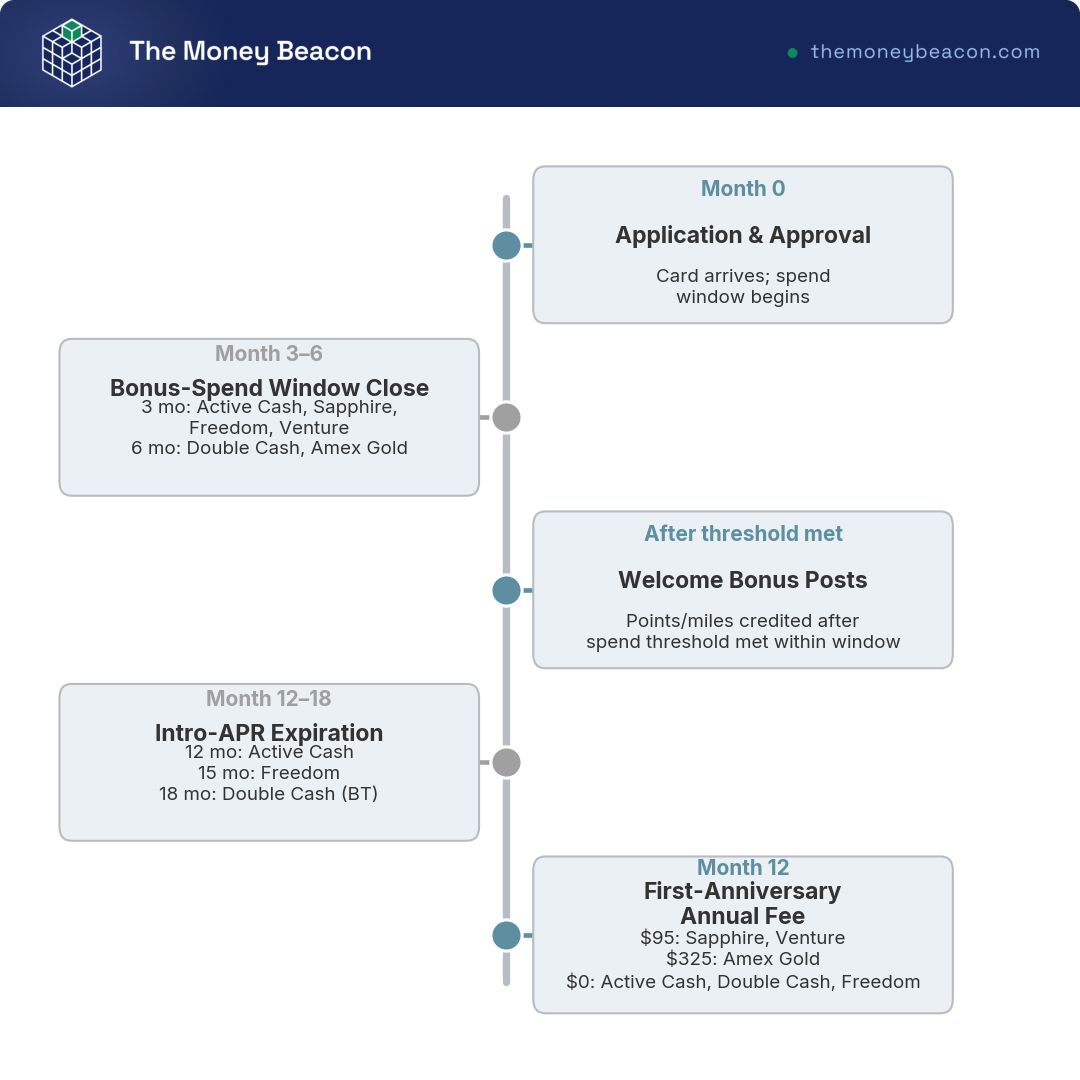
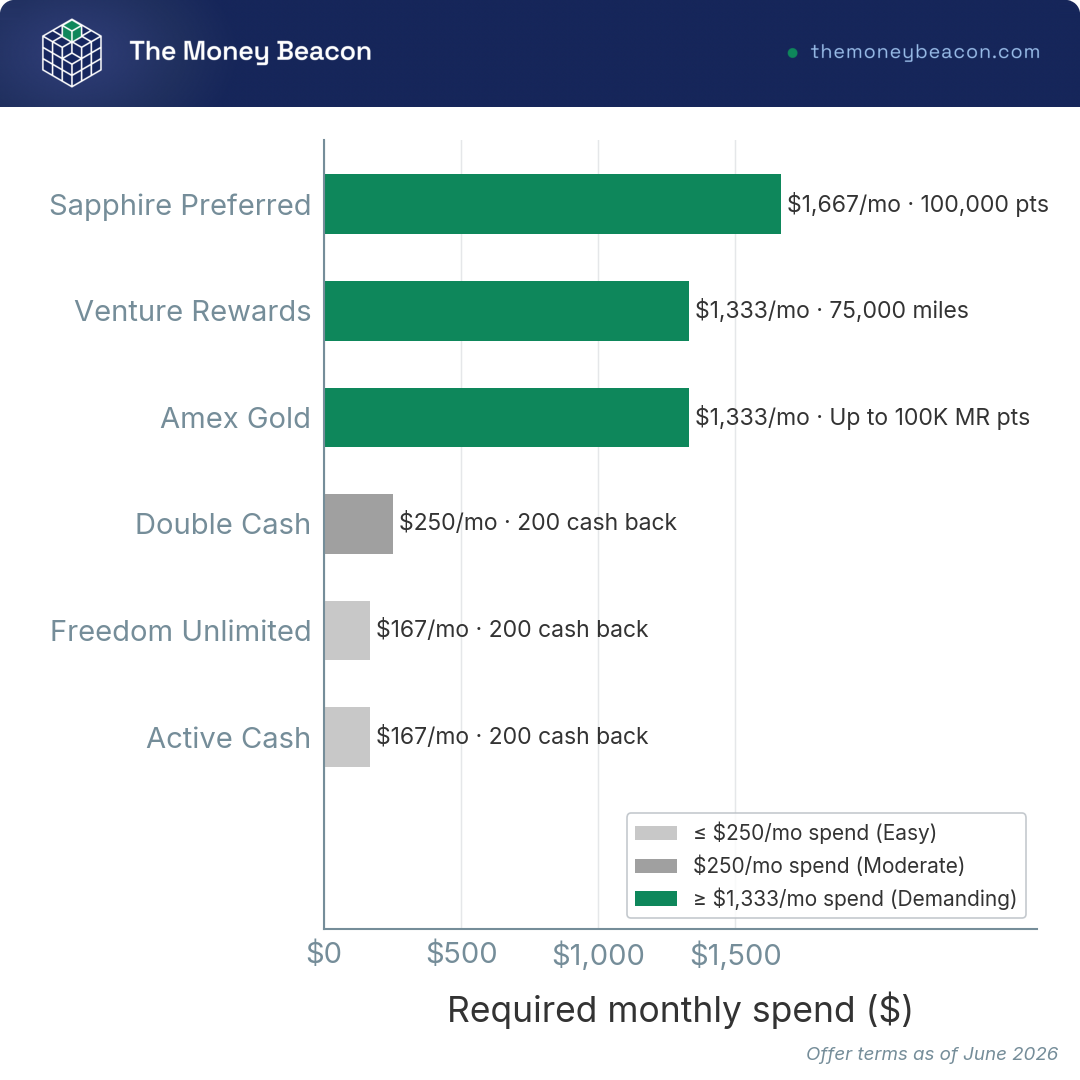
| Sign-up bonus | 100,000 points after $5,000 spend in 3 months (about $1,667/month) |
| Foreign transaction fee | $0 |
| Balance transfer fee | Typically 5%, min $5 |
| Cash advance fee | Typically 5%, min $10 |
Data current as of June 2026.
The bonus after spending $5,000 in three months is pretty generous, but only if you’re already planning on spending that much. Just check it against your actual budget before applying.
2.5 Who it’s for
This card fits a frequent traveler who wants transfer-partner upside and travel protections without a premium fee, who can use the $100 hotel credit, and who has Very Good to Excellent credit (740 and up, with Chase’s 5/24 application practice in play). If you will redeem only for cash, you give up most of the upside and a flat 2% card would serve you better. The same goes if you tend to carry a balance, since there is no intro APR to soften it, or if you simply want a card you never have to think about. Map your travel and dining spend first, because that is what decides whether the $95 is worth paying.
3. American Express Gold Card: best for the dining-and-grocery spender who uses the credits
3.1 Overview
The American Express Gold Card is a dining-and-grocery rewards card that’s all about Membership Rewards points, with monthly statement credits that drive most of its real value. It runs on the Amex network, where acceptance can be thinner abroad than Visa or Mastercard. The fee is the one number that scares people off: $325 a year, the highest in this comparison. It waives foreign transaction fees and generally calls for Good to Excellent credit scores. Whether that $325 is a bargain or a trap depends entirely on one thing, your discipline with the monthly credits, and that is what this review works through.
3.2 Strengths
The earning is built for a full grocery cart and a busy dinner calendar. You get 4x at restaurants worldwide on up to $50,000 a year, 4x at US supermarkets on up to $25,000 a year, 5x on prepaid hotels and 3x on flights booked through Amex Travel. Membership Rewards points transfer 1:1 to most partners and can reach roughly 1.0 to 2.0 cents each depending on the redemption, so a heavy food spender stacks value quickly.
Then come the credits that chip away at that $325. You get up to $10 a month in dining credits, up to $10 a month in Uber Cash, a $100-a-year Resy credit, and a $7-a-month Dunkin’ credit, alongside $0 in foreign transaction fees. Used in full, those credits can offset most of the annual fee before the points even enter the math.
3.3 Weaknesses
That $325 is real money, and its offset depends on credits that reset every month and disappear if you don’t use them. If you forget a $10 dining credit for three months in a row, you’ve basically paid $30 for nothing. So, if you’re not going to use the credit regularly, you’ll probably end up skipping most of it.
This card is a bit more demanding than the others. The Pay Over Time APR is assigned individually and not published, so you can’t price the cost of carrying a balance in advance. It’s the least set-and-forget card of the six, since the credits only count if you actively trigger them. And even though Amex doesn’t charge a foreign transaction fee, their cards might not be accepted as much as Visa or Mastercard’s in other countries. So, just because there’s no fee doesn’t mean your card will be accepted at checkout.
3.4 Pricing & fees
The cost side is unusual for this card, because it behaves like a charge product rather than a standard credit card.
| Term | Detail |
|---|---|
| Annual fee | $325 |
| Purchase APR | Pay Over Time, assigned individually (not published) |
| Intro APR | None |
| Sign-up bonus | Up to 100,000 Membership Rewards after $8,000 spend in 6 months (about $1,333/month) |
| Foreign transaction fee | $0 |
| Balance transfer | Not applicable (charge product) |
| Cash advance | Per card terms |
Data current as of June 2026.
The welcome offer is pretty generous, but it’s only worthwhile if you spend the $8,000 on what you’d buy anyway, instead of making purchases to chase the bonus.
3.5 Who it’s for
This card suits a heavy dining-and-grocery spender, modeled at about $25,000 a year in those buckets, who will reliably use the monthly credits every single month and has Good to Excellent credit (670 and up, with 740 and up preferred). If you want a card you can forget about, if you know you will forget the credits, or if you are not confident you will spend enough on food to clear the $325, this is the wrong fit and a no-fee card will beat it. The credits are what make the fee worthwhile, so be honest with yourself about whether you’ll actually use them before you sign up.
4. Wells Fargo Active Cash: best for the no-fuss flat 2% user who wants an intro-APR runway
4.1 Overview
The Amex Gold asks you to work for its value every month. The Wells Fargo Active Cash asks you for nothing, and that is exactly its appeal. It is a flat-rate cash-back card built around one unlimited 2% rate, on the Visa network, with no annual fee and no categories to track. This is the card for the no-fuss flat-rate household, the one running about $20,000 a year across everyday spending, that wants a reliable rate and an intro-APR runway rather than a points puzzle to manage. So, is a plain 2% actually enough? That’s what this review is all about.
4.2 Strengths
The whole case is based on one number that you never have to think about again. You earn an unlimited 2% cash rewards on every purchase, with no categories to track and no quarterly activation, which puts a reliable 2% floor under all your spending. On top of that, you get a 0% intro APR on purchases and qualifying balance transfers for 12 months. So, if you have a planned purchase to spread out or a balance to move, this is a great option. The extras are pretty basic, but they’re decent: cell phone protection up to $600 (with a $25 deductible) if you pay with the card, no annual fee, and a $200 cash bonus after just $500 of spending in the first three months, about $167 a month. That bonus threshold is the easiest to reach of the six cards in this comparison without manufacturing spend.
That reliable 2% is the strength most people buy this card for, and our wider cash back card comparison digs into how that floor stacks up against bonus-category rivals when you want to squeeze the most cash out of everyday spending.
4.3 Weaknesses
The simplicity has its pros and cons, and the first cost shows up the moment you leave the country. The card charges a 3% foreign transaction fee, which makes it a poor choice abroad: on a $3,000 overseas trip, that is $90 in fees that quietly cancels most of the rewards you earned. There is no transfer-partner upside either, since the rewards are cash only at 1.0 cent per point, so 2% is the ceiling rather than a starting point. Travel protections are pretty limited, and while the flat 2% is a solid floor, a bonus-category card will out-earn it for anyone who spends a lot on travel or dining.
The intro APR is a genuine help, but only on a clock. If you carry a balance past the 12-month window, the rate reverts to the variable purchase APR, and once that APR is running, the interest erases the rewards.
4.4 Pricing & fees
Here is the full cost-and-bonus picture for the Active Cash, from the card’s current terms.
| Term | Detail |
|---|---|
| Annual fee | $0 |
| Variable purchase APR | 18.49%, 24.49%, or 28.49% by creditworthiness |
| Intro APR | 0% for 12 months on purchases and balance transfers |
| Sign-up bonus | $200 after $500 spend in 3 months (about $167/month) |
| Foreign transaction fee | 3% |
| Balance transfer fee | Intro, then up to 5% |
| Cash advance fee | Typically 5% |
Data current as of June 2026.
A $200 bonus for $500 of spending in three months is the lowest bonus threshold of the six, so you can turn a profit in year one without changing how you spend.
4.5 Who it’s for
This card fits a no-fuss user who wants one flat rate, no annual fee, a 12-month intro-APR runway, and cell-phone protection, and who has at least Good credit (670 and up). If a card you never have to think about is the whole point for you, the Active Cash delivers it. It is the wrong pick if you travel internationally, where the 3% foreign transaction fee applies, or if you want transfer-partner upside or bonus-category multipliers on travel and dining. If you use it for all your payments, the 2% flat rate works exactly as advertised, which is the entire reason to choose a card this simple.
5. Citi Double Cash: best for the flat-rate user who wants a balance-transfer runway
5.1 Overview
A flat 2% can come by more than one route. The Citi Double Cash card is pretty straightforward. It’s got two halves, giving you 1% when you buy and another 1% as you pay it off, for a total of up to 2%. Plus, you’ll get rewards as ThankYou points, worth 1 cent each, on the Mastercard network. It’s from Citi (Citibank), and it doesn’t have an annual fee. It’s perfect for someone who wants the longest balance-transfer option available or who might later add a Citi premium card to unlock more benefits. That two-part mechanic is the feature that makes this card worth a closer look.
5.2 Strengths
The earning rate matches the simplest cards here, but the runway is where this one really shines. You can get up to 2% total with no annual fee and no categories, paid as ThankYou points. There’s also a 0% intro APR on balance transfers for a full 18 months, which is the longest such window in this set. This is a great option if you are carrying a balance you want to clear without interest. There’s also a way to get more out of it later on: pair the card with an eligible Citi premium ThankYou card, and the points unlock transfer-to-partner redemptions worth about 1.7 to 2.0 cents each, which is way more than their plain 1-cent cash value. The $200 bonus is yours after spending $1,500 in six months. That’s just about $250 a month, which is a pretty relaxed pace for most households.
That long interest-free window is the big draw, and our longest 0% intro offers and their transfer fees comparison lays out how an 18-month runway like this measures up once you factor in the transfer fee you pay to use it.
5.3 Weaknesses
The two-part design actually has a hidden catch. The second 1%, the pay half, only posts as you actually pay off the purchase, so a late or skipped payment costs you that half of your rewards on top of any interest. The flat 2% you were promised quietly becomes 1% the month you slip. Like the other no-fee cards here, it charges a 3% foreign transaction fee, which makes it weak abroad. On its own the card redeems at just 1.0 cent per point, and it reaches that higher transfer value only when paired with a Citi premium card, so a solo holder never sees the upside. Travel protections are few. And the 0% intro applies to balance transfers only, not to purchases, so it won’t protect new spending from interest.
5.4 Pricing & fees
Here is the full cost-and-bonus picture for the Double Cash, from its current terms.
| Term | Detail |
|---|---|
| Annual fee | $0 |
| Variable purchase APR | 17.49% to 28.24% |
| Intro APR | 0% for 18 months on balance transfers (not purchases) |
| Sign-up bonus | $200 after $1,500 spend in 6 months (about $250/month) |
| Foreign transaction fee | 3% |
| Balance transfer fee | Intro, then 3% to 5% |
| Cash advance fee | Typically 5% |
Data current as of June 2026.
The 18-month balance-transfer window is the key thing to keep in mind, as it’s longer than any other card here, and it’s exactly why a flat-rate shopper would pick this one.
5.5 Who it’s for
This card fits a flat-rate user who wants a long balance-transfer runway, or who may later add a Citi premium card to convert points into transfer value, and who has at least Good credit (670 and up, with Citi’s 48-month bonus rule per card in play). If clearing a balance interest-free or building toward a Citi pairing is your goal, the 18-month window and the ThankYou ecosystem earn their place. It is the wrong fit for international travelers, given the 3% foreign transaction fee, for anyone who wants travel protections, and for anyone who wants travel protections or who won’t pay on time, since that second 1% depends entirely on your payment discipline.
6. Chase Freedom Unlimited: best for the $0-fee everyday earner that pairs with a Chase travel card
6.1 Overview
The two flat-rate cards give you the same reward on every dollar. The Chase Freedom Unlimited is a bit different. It adds bonus categories on top of the base rate, which makes it the most versatile of the $0-fee cards here. It earns Chase Ultimate Rewards, has no annual fee, runs on the Visa network, and is best used as a companion to a Sapphire card. This card is perfect for anyone looking for a cheap, everyday earner that works within the Chase ecosystem. This review will test the pairing angle.
6.2 Strengths
The earning is better than a simple 2% because it combines rates by category. You get 5x on travel booked through Chase Travel, 3x on dining and at drugstores, and 1.5x on everything else. That’s a 1.5% base floor as cash with stronger rates where you spend the most. The card charges no annual fee and adds a 0% intro APR on purchases and balance transfers for 15 months, three months longer than the Active Cash runway. You’ll get a $200 bonus after spending $500 in the first three months, which is about $167 a month. The real lever, though, is pairing: combine this card with a Sapphire or Ink card in the same household and those 1.5x and 3x earnings stop being plain cash and convert into transfer-partner value. Pair a $0-fee earner with a premium card in the same ecosystem and you earn cheaply, then transfer the combined points for travel worth well above their cash rate.
Our cash back card comparison is perfect for helping you figure out when you need broad coverage without paying an annual fee.
6.3 Weaknesses
The pairing that makes this card shine is also its biggest drawback. Freedom Unlimited points don’t transfer to partners, and they’re only worth 1.0 cent each, so the best travel value you’ll get with this card is going to require a premium Chase card.Without that companion, you’re holding a solid cash-back card, but that’s about it. It also charges a 3% foreign transaction fee, which makes it less useful abroad, just like the other two $0-fee cards. And there is a gate before any of this matters: the card is subject to Chase 5/24, the practice under which Chase generally declines applicants who have opened five or more new personal cards across all banks in the past 24 months. If you mess up on that line, you’re out of the game before the rewards even enter the picture.
6.4 Pricing & fees
Here is the full cost-and-bonus picture for the Freedom Unlimited, from its current terms.
| Term | Detail |
|---|---|
| Annual fee | $0 |
| Variable purchase APR | 18.24% to 27.74% |
| Intro APR | 0% for 15 months on purchases and balance transfers |
| Sign-up bonus | $200 after $500 spend in 3 months (about $167/month) |
| Foreign transaction fee | 3% |
| Balance transfer fee | Intro, then up to 5% |
| Cash advance fee | Typically 5% |
Data current as of June 2026.
The 15-month 0% intro on both purchases and balance transfers is the most flexible deal among these $0-fee cards, covering a planned purchase and an old balance at once.
6.5 Who it’s for
This card is perfect for anyone looking for a no-fee everyday earner that pairs with a Sapphire card to turn 1.5x and 3x earnings into transfer value. Just make sure you have at least good credit (670 and up, with Chase 5/24 in play). If you’re okay with using a two-card system within the Chase ecosystem, this is where the card really starts to pay off. It’s not the best for international travelers because there’s a 3% foreign transaction fee, and it’s not for people who want a single set-and-forget card rather than a pairing strategy.
A new cardholder also has a calendar to mind.
That two-card logic also comes up in our travel rewards cards comparison shows what a premium partner brings to the pairing once you decide to build one.
7. Capital One Venture Rewards: best for the flat-miles traveler who wants zero tracking
7.1 Overview
The last few cards either offered stacked bonus categories or needed a premium partner to reach real travel value. The Capital One Venture Rewards is a different beast. It gives you double miles on every purchase, no categories to keep track of, and you don’t even need a second card. But there’s a catch: there’s a $95 annual fee. Think of it as a travel card from Capital One built around simple miles and a small set of transfer partners, issued on the Visa or Mastercard network depending on the batch. It waives foreign transaction fees and typically asks for Very Good to Excellent credit. So is 2x on everything with no homework worth $95? That’s what this section is all about.
7.2 Strengths
The whole appeal is that you never have to think about which category you are in. You earn 2x miles on every purchase, plus 5x miles on hotels, vacation rentals, and rental cars booked through Capital One Travel, so the rate is the same whether you are buying groceries or a flight. Each mile is worth 1 cent toward travel as a floor, and through transfer partners at a 1:1 ratio it can reach roughly 1.0 to 2.0 cents, real upside on a strong redemption. The card waives foreign transaction fees, which makes it genuinely usable abroad. Plus, you’ll get up to a $120 statement credit for Global Entry or TSA PreCheck every four years. Redemption stays simple too, since the purchase-eraser feature lets you wipe a recent travel charge straight off your statement with miles.
7.3 Weaknesses
That flat-rate simplicity is also where its limits come from. The $95 annual fee is on what is otherwise a plain 2x card, so if you’re a low spender, you can get a 2% card with a low annual fee. There are no bonus-category multipliers either, since dining and groceries earn the same flat 2x as everything else, which leaves real money on the table for a heavy food spender. The card doesn’t have an intro-APR offer, so the 19.49% to 28.49% purchase APR applies from day one if you don’t pay off your balance. The transfer-partner value is a real bonus, but it’s more of an upside than a promise, with a cap of around 2.0 cents per mile only when you redeem it right. Plan around the 1-cent floor and treat anything above it as a windfall.
7.4 Pricing & fees
Here is the full cost-and-bonus picture for the Venture Rewards, from its current terms.
| Term | Detail |
|---|---|
| Annual fee | $95 |
| Variable purchase APR | 19.49% to 28.49% |
| Intro APR | None |
| Sign-up bonus | 75,000 miles after $4,000 spend in 3 months (about $1,333/month) |
| Foreign transaction fee | $0 |
| Balance transfer fee | Per card terms |
| Cash advance fee | Typically 5% |
Data current as of June 2026.
The welcome offer is generous, but it only pays off if that $4,000 of spend matches what you would buy anyway, not purchases you manufacture to chase it.
7.5 Who it’s for
This card fits a traveler who wants flat 2x miles on everything with no category tracking, no foreign transaction fees, and simple redemption, and who has Very Good to Excellent credit (740 and up, with Capital One’s one-card-at-a-time guidance in play). If you want travel rewards without running a points spreadsheet, this is the card that asks the least of you. It is the wrong pick for a heavy dining or grocery spender, where a category card earns far more on the same baskets, or for a very low spender who would not put enough through it to clear the $95 against a free 2% card. First, make sure the fee matches your yearly spending. That way, you can decide if the simplicity is worth the cost.
8. The verdict: which 2026 rewards card wins for your profile
8.1 The full side-by-side comparison
Now that we’ve run all six cards through the same process, here’s how they compare in terms of what they earn per dollar in each category, after a realistic point or mile valuation.
| Card (issuer) | Travel | Dining | Groceries | Base | Point value assumed |
|---|---|---|---|---|---|
| Sapphire Preferred (Chase) | 5x Chase Travel / 2x other | 3x | 3x online groceries | 1x | ~2.0 cpp transfer |
| Amex Gold (Amex) | 3x flights / 5x prepaid hotels | 4x restaurants | 4x US supermarkets | 1x | ~2.0 cpp transfer |
| Active Cash (Wells Fargo) | 2% | 2% | 2% | 2% | 1.0 cpp cash |
| Double Cash (Citi) | 2% | 2% | 2% | 2% | 1.0 cpp cash |
| Freedom Unlimited (Chase) | 5x Chase Travel | 3x | 1.5x | 1.5x | 1.0 cpp cash / 2.0 paired |
| Venture Rewards (Capital One) | 5x C1 Travel / 2x | 2x | 2x | 2x | ~2.0 cpp transfer |
Data current as of June 2026.
If you look across the rows, just keep one thing in mind. The tail cost dwarfs every reward rate, because carrying a $1,000 balance at about 22% APR (the latest Federal Reserve reading sits near 21.5%) costs roughly $220 a year and erases the rewards on that $1,000 several times over.
If a carried balance is a real risk for you, the smarter route is often to clear it first, and our roll high-rate balances into one cheaper payment guide walks you through how to do that before you chase any rewards.
8.2 Verdict by reader profile
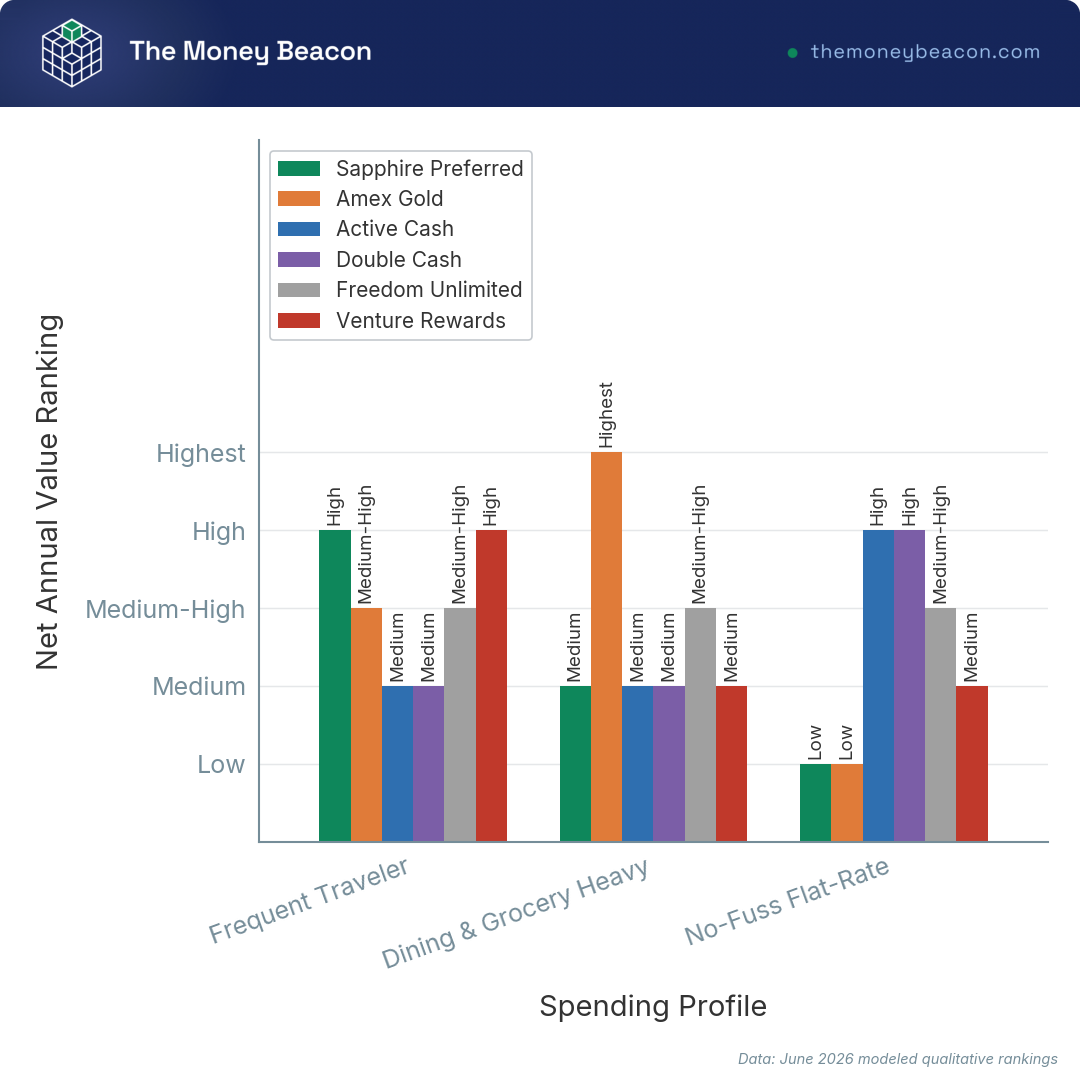
The side-by-side facts only matter once you map them to how you actually spend, so here is the call for each of the three profiles we modeled.
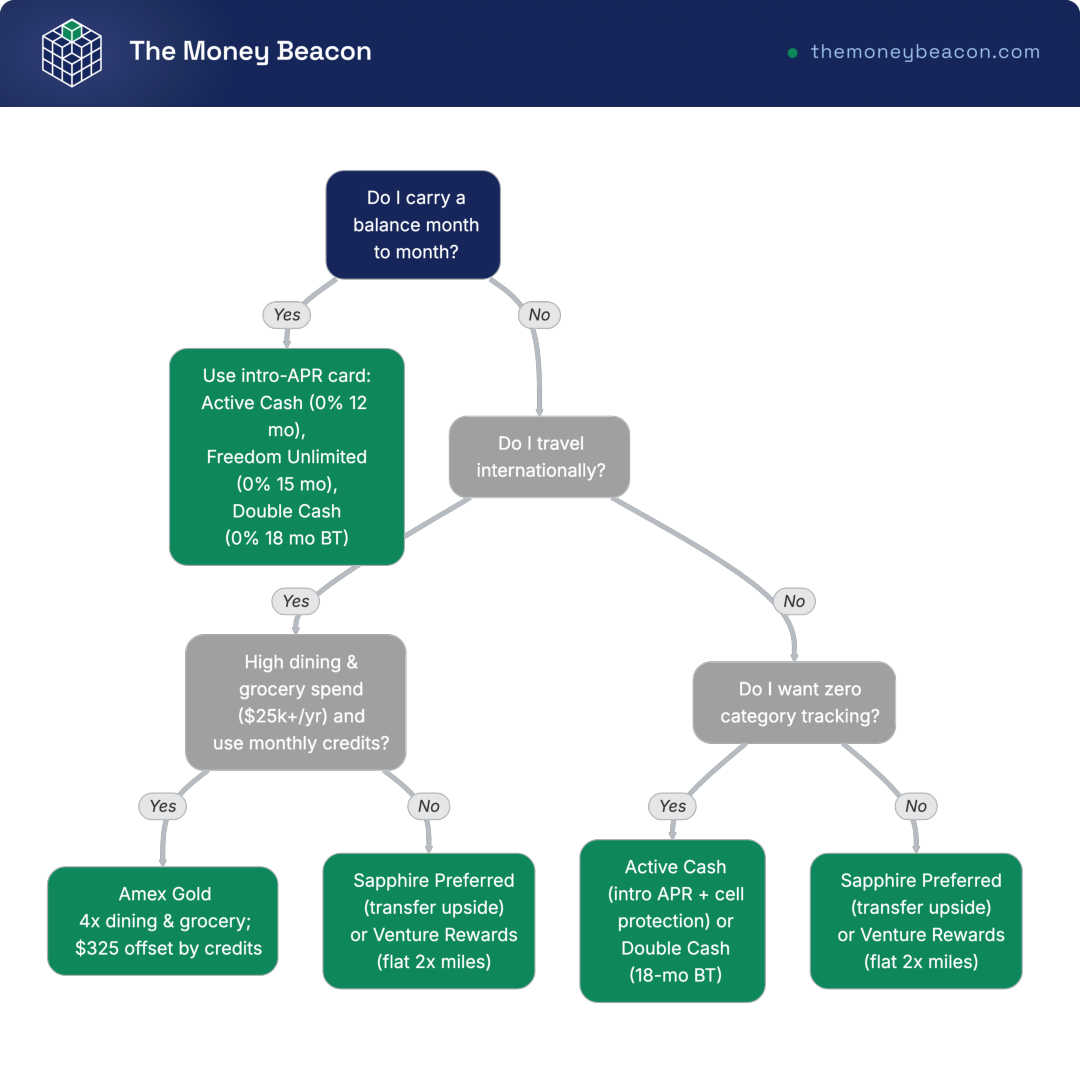
For the frequent traveler spending around $30,000 a year weighted toward travel and dining, two cards outperform: the Chase Sapphire Preferred if you will work transfer partners for that ~2.0-cents-a-point upside, or the Capital One Venture Rewards if you want flat 2x miles with zero tracking. Both waive foreign transaction fees, which settles the international question.
For the dining-and-grocery-heavy spender at about $25,000 a year, the American Express Gold is your pick, but only if you will reliably use the monthly statement credits, which is what justifies the $325 fee. For the no-fuss flat-rate user at roughly $20,000 a year, the Wells Fargo Active Cash earns its place with an intro APR on purchases plus cell-phone protection, while the Citi Double Cash offers a longer 18-month balance-transfer runway and a future Citi pairing; just remember both charge 3% abroad.
| Card | Frequent traveler | Dining & grocery heavy | No-fuss flat-rate |
|---|---|---|---|
| Sapphire Preferred | High (travel/dining + transfers) | Medium | Low (after $95 fee) |
| Amex Gold | Medium-High (if credits used) | Highest (if credits used) | Low (fee + unused credits) |
| Active Cash | Medium (flat 2%) | Medium | High (flat 2%, $0 fee) |
| Double Cash | Medium (flat 2%) | Medium | High (flat 2%, $0 fee) |
| Freedom Unlimited | Medium-High (paired) | Medium-High | Medium-High |
| Venture Rewards | High (flat 2x + transfers) | Medium | Medium (after $95 fee) |
Data current as of June 2026.
Three guardrails hold no matter which row you land on. If you ever carry a balance, pick a $0-fee intro-APR card and stop optimizing rewards until it is gone. If you travel abroad, avoid the three 3% foreign-transaction cards. And treat a sign-up spend requirement as free only if it matches spending you would do anyway, never as a reason to buy more.
Tom’s take

I treat these cards as a tool, not a trophy. I map a year of spend by category before I apply, and I only chase a welcome bonus when the required spend is money I was already going to put on a card. The day you carry a balance, the whole rewards game is over, so I never do, and if there is any chance I might, a flat 2% no-fee card is the only correct answer.
If clearing an old balance interest-free is your first task, our balance transfer card comparison shows which intro windows buy you the most breathing room before the rewards math even begins.
Conclusion
If there is one idea worth remembering, it is that no single card wins for everyone, and net value after the fee, not the headline bonus, decides who wins for you.
Two guardrails matter more than any earn rate, and this is the part I watch people skip. With the average APR on cards charged interest near 22% in the latest Federal Reserve data, a single carried balance erases a full year of rewards, so if you ever revolve a balance, reach for a $0-fee intro-APR card and stop optimizing points. The second guardrail is travel abroad. The three $0-fee cards here charge a 3% foreign transaction fee, which quietly taxes every purchase overseas. Think of a sign-up spend requirement as free money only when it matches spending you would make anyway. Don’t use it as a reason to buy more.
From here, you can dig deeper on the path that fits your spending. If flat-rate simplicity is your style, our comparison of the best cash back cards breaks down where each rate actually beats a plain 2% floor. Travelers chasing transfer-partner value will find the redemptions worked out in our guide to the best travel rewards cards. And if a carried balance is the real problem, our comparison of the best balance transfer cards shows how a long 0% intro window can help you clear the debt before the interest does.
FAQ: choosing your best rewards credit card in 2026
What is the best credit card overall in 2026, or does it depend on how I spend?
It depends on your spending, because no single card wins for everyone: a frequent traveler usually nets the most from the Chase Sapphire Preferred or the Capital One Venture Rewards, a heavy dining-and-grocery household from the Amex Gold if it uses the monthly credits, and a no-fuss user from a $0-fee flat 2% card such as the Wells Fargo Active Cash or the Citi Double Cash. The honest way to decide is to map your annual spend by category first, then compare the net value after the annual fee. Headline bonuses make for good marketing, but it is the net dollars left after fees that name the winner for your wallet.
Is a credit card with a $95 or $325 annual fee ever worth it over a no-fee card?
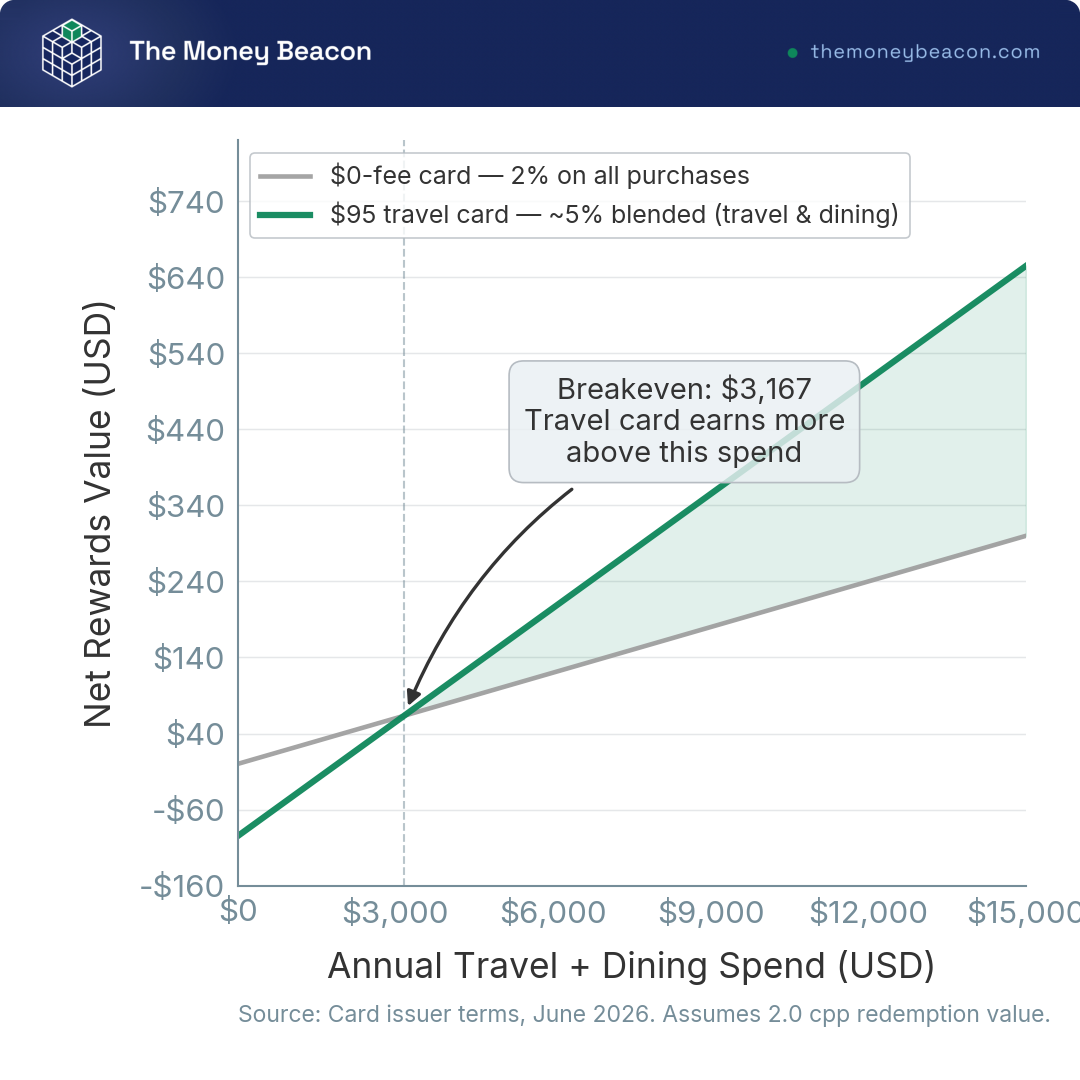
Yes, when the bonus-category earnings plus the perks you will genuinely use exceed the fee plus what a flat 2% card would have earned on the same spend. A $95 travel card typically pays off once your combined travel and dining runs to several thousand dollars a year, since the 3x and 5x multipliers and transfer-partner value outweigh the fee. The $325 Amex Gold is a different animal: its math leans on monthly statement credits, up to about $20 a month in dining and Uber Cash, plus a $100 yearly Resy credit and a $7 monthly Dunkin’ credit. Those credits reset every month and vanish if you forget them, so I value any credit that needs an action you will skip at close to zero. If you will not reliably use them, the no-fee card is the smarter pick.
How do I calculate the effective earn rate of a rewards credit card?
Multiply the points or miles you earn per dollar by your assumed value per point, then read it as a percentage. Three points per dollar on dining valued at 2.0 cents per point is an effective 6% on dining, while the same points redeemed for cash at 1.0 cent are worth only 3%. That gap is the whole game, because the cents-per-point figure you assume swings the answer more than the multiplier does. Treat 1.0 cent as the conservative cash baseline and anything up to roughly 2.0 cents as upside, not a guarantee. Once you have the earn rate, net the annual fee against your total modeled rewards to land on the true net value. That single net-dollar number is what makes two very different cards finally comparable.
Are travel points worth more than flat cash back?
They can be, but only if you transfer to airline or hotel partners and actually book high-value redemptions. At roughly 2 cents per point, a 3x dining card beats a flat 2% card on that spend. Realized transfer value generally runs from about 1.0 to 2.0 cents per point, and redeemed for plain cash many points are worth just 1 cent, so the upside is real but conditional. For someone who will not engage with transfer partners, a flat 2% card wins because it pays a reliable floor with no effort. Note too that a couple of these cards, the Chase Freedom Unlimited and the Citi Double Cash, only reach top transfer value when paired with a premium card in the same ecosystem; on their own they redeem at 1 cent. If miles and partners are not your thing, our comparison of the best travel rewards cards and our roundup of cash back cards can help you see which side of that line you fall on.
Does carrying a balance cancel out my credit card rewards?
Almost always, and it is not close. With the average APR on credit card accounts assessed interest sitting around 22% (about 21.5% in the latest Federal Reserve G.19 reading), even a few months of interest dwarfs the 1.5% to 2% you earn in rewards on that spend. Carry a $1,000 balance at roughly 22% and you are looking at about $220 a year in interest, which no rewards rate will claw back. Rewards cards only make sense if you pay in full every month. If you are already carrying a balance, ignore rewards optimization entirely and pick a $0-fee intro-APR card to dig out first; our guide to the best balance transfer cards walks through how that runway works. Clear the debt, then come back to the rewards math.



Comments
Questions and corrections welcome. We read everything.